How to Set Up a Montessori Language Shelf at Home
Homeschool families new to Montessori often ask, "What goes on the language shelf, and in what order?" The short answer: the shelf follows the same order every child goes through when learning to read. Sounds first, then letters, then building words, then reading. The materials just make each step hands-on.
The Order: What Comes First
Language shelf work follows a clear sequence. Skipping ahead rarely helps and can set a child back. A child without solid phonemic awareness will struggle with word building no matter how many materials you put out.
The order is: (1) talking and vocabulary, (2) phonemic awareness (hearing sounds), (3) letter-sound knowledge, (4) building words with moveable letters or cards, (5) reading simple words and sentences.
Your shelf should have something for each stage your child is working on. It doesn't need everything at once.
Vocabulary and Matching Works
Before reading, children need lots of vocabulary. Matching works, like pairing a picture card with an object or a picture card with a label, build vocabulary and the habit of looking carefully.
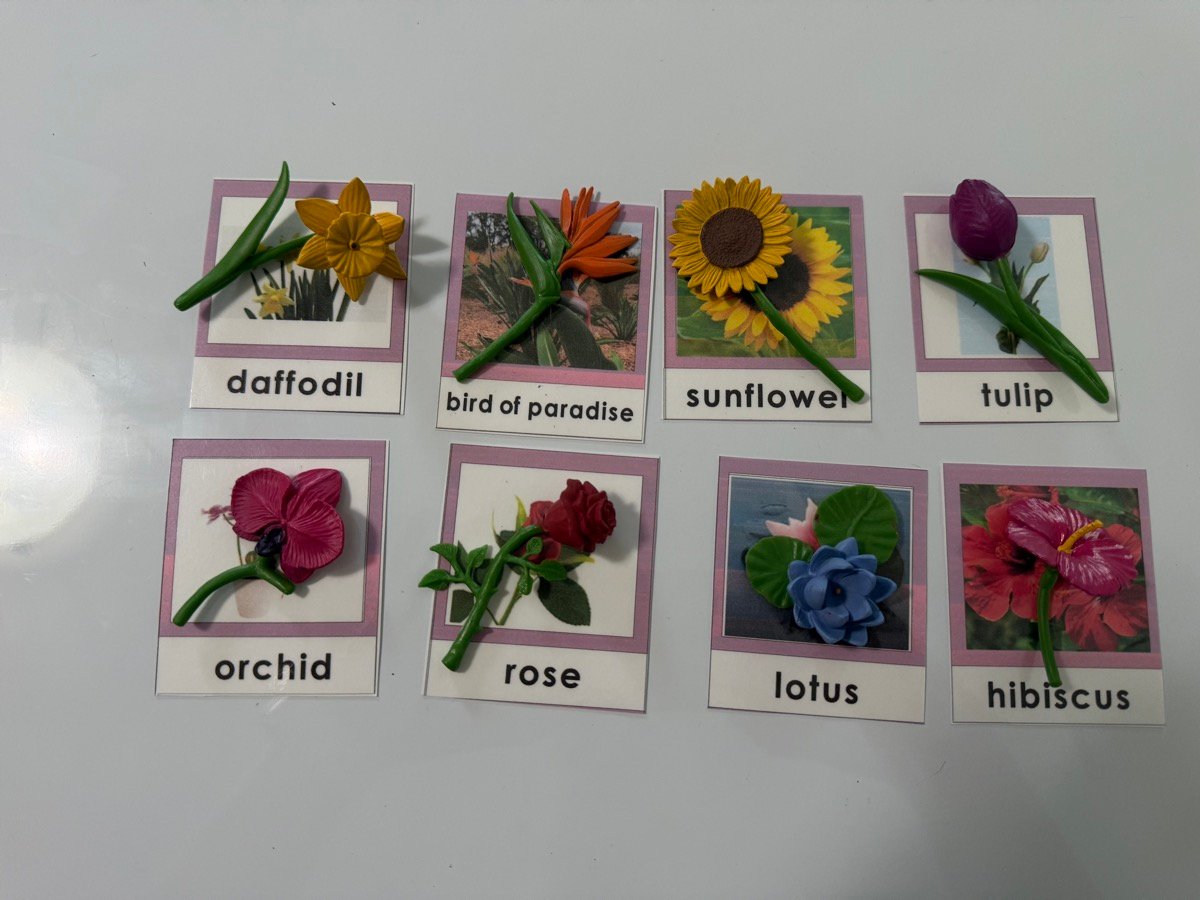
Flower matching works well at this stage. A child matches a daffodil card to a daffodil label, a tulip card to a tulip label. It's self-correcting, and you can add to it by having the child find each flower in a book or outside.
Word Building on the Language Shelf
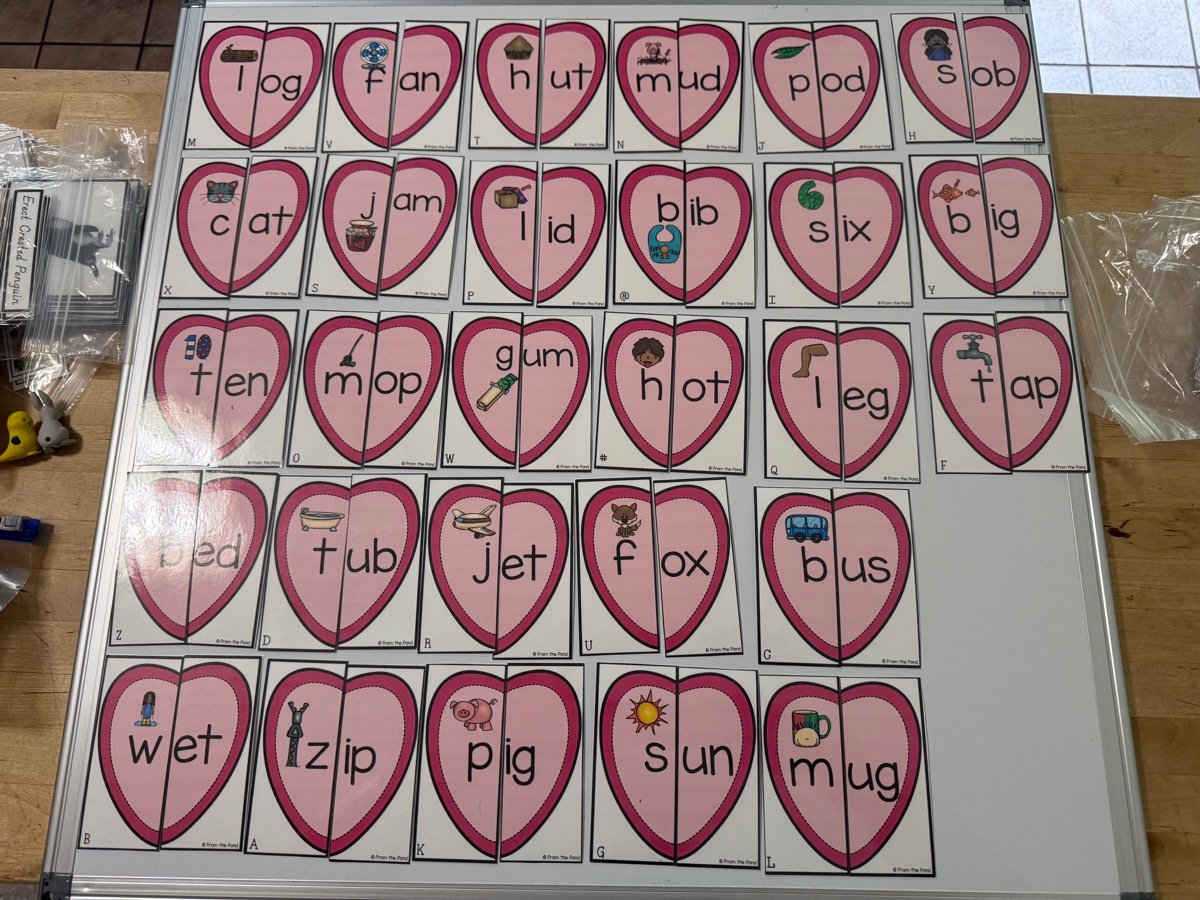
Once a child knows the letter sounds, word building lets them practice sounding out words without a timed test or a parent hovering.
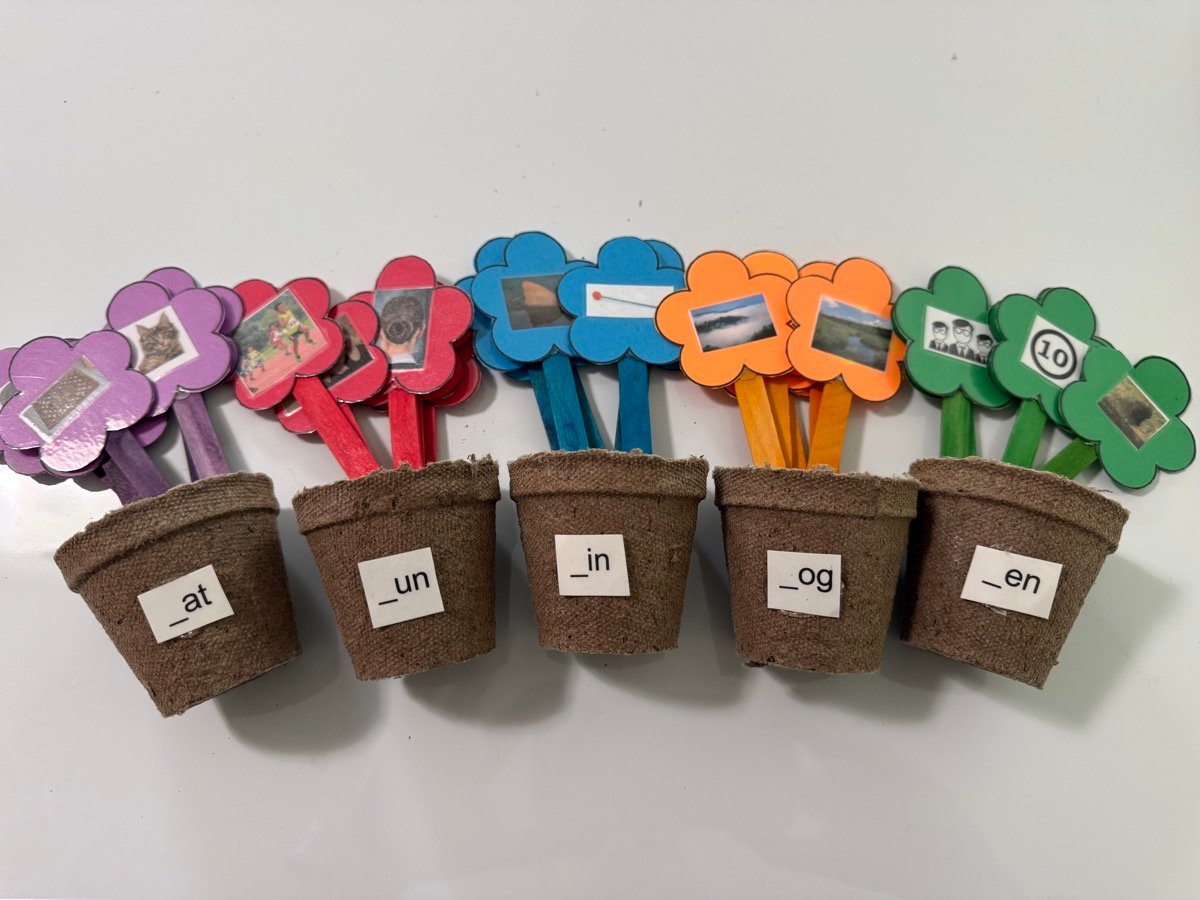
Word family materials work especially well here. A child sorts picture cards into word family pots (_at, _un, _in) and hears the pattern in the words. That's phonemic awareness and phonics working together.
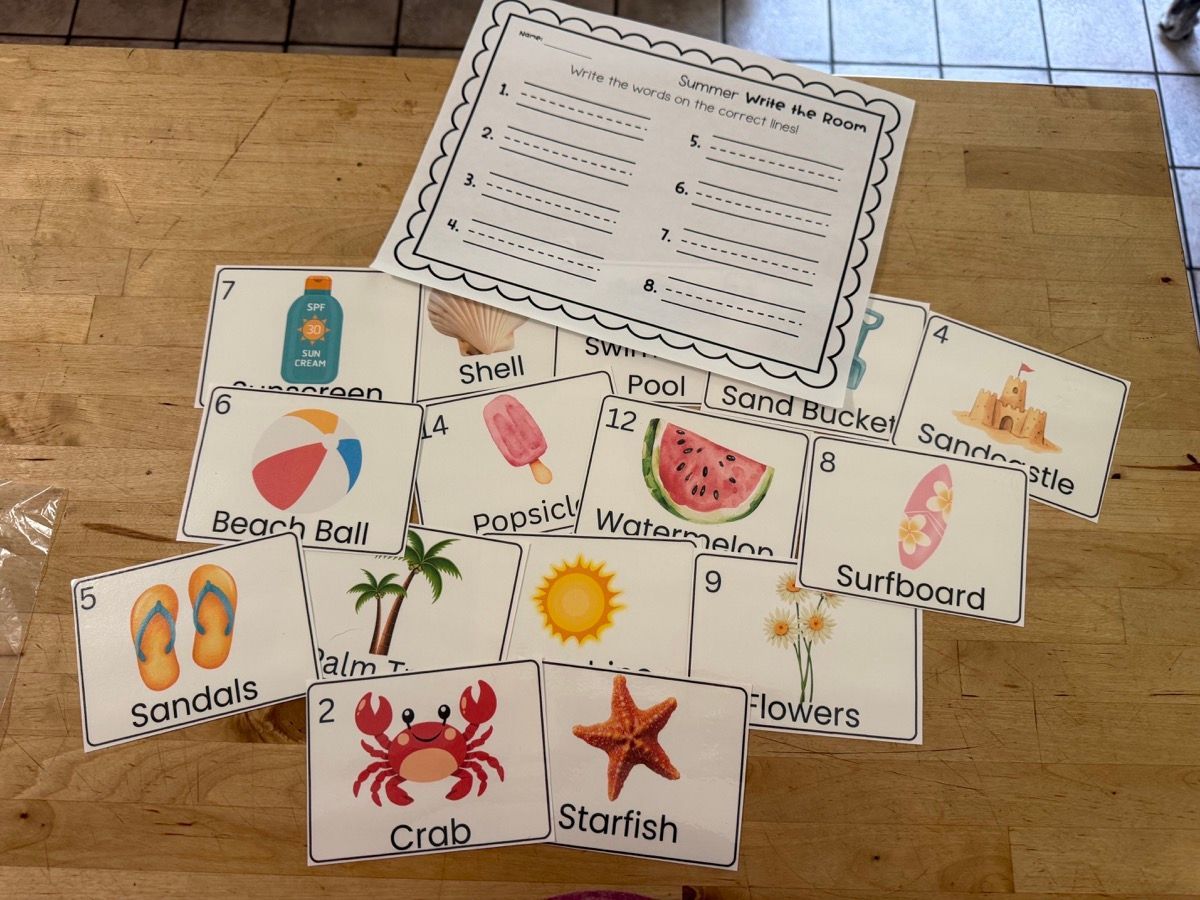
Rotate word building materials with the seasons: Valentine's Day word cards in February, summer write-the-room cards in June. The theme changes but the skill practice keeps going.
How Much Goes on the Shelf
Less is usually better. Three or four language works at a time is plenty for most children. With too many choices, kids pick things up and put them back without really working.
Rotate materials every week or two, or when a child has mastered a work or lost interest. Keep a small box nearby with the next few works ready to swap in.
Frequently Asked Questions
Does a Montessori language shelf have to be an actual shelf?
No. A low bookshelf, part of a coffee table, or even a basket on the floor works fine. What matters is that the materials are at the child's level, organized, and easy for them to get out on their own.
When should I add reading books to shelf work?
Add simple phonics readers once a child can reliably sound out CVC words. Keep them on or near the language shelf. You don't need to wait until shelf work is "done." Books and shelf work help each other.
What if my child only wants one work and ignores the rest?
That's usually fine. Working deeply on one material is worth more than trying a bit of everything. If a child picks the same work every day for two weeks, it's meeting a real need. Only swap it out once they've clearly mastered it.