Montessori Math Materials You Can Use at Home (No Expensive Beads Required)
Montessori math has a reputation for needing a lot of expensive materials: golden bead chains, stamp games, colored bead bars. Those are great in a fully equipped classroom, but you can do the core ideas at home with much simpler tools. The rule is always the same. Children need to hold a quantity in their hands before they can understand it on paper.
Concrete to Abstract: The Basic Principle
Regular math instruction often moves to symbols too fast. A child is shown 3 + 4 = 7 on paper before they really know what "three" and "four" mean as amounts.
Montessori math holds off on the written part. First the child works with real objects (beads, counters, tiles) and builds the amount with their hands. Written numbers and equations come in only after that is solid.
Kids taught this way understand the math instead of just following steps. Every activity below follows this order.
The Bead Stair: Quantities 1–10
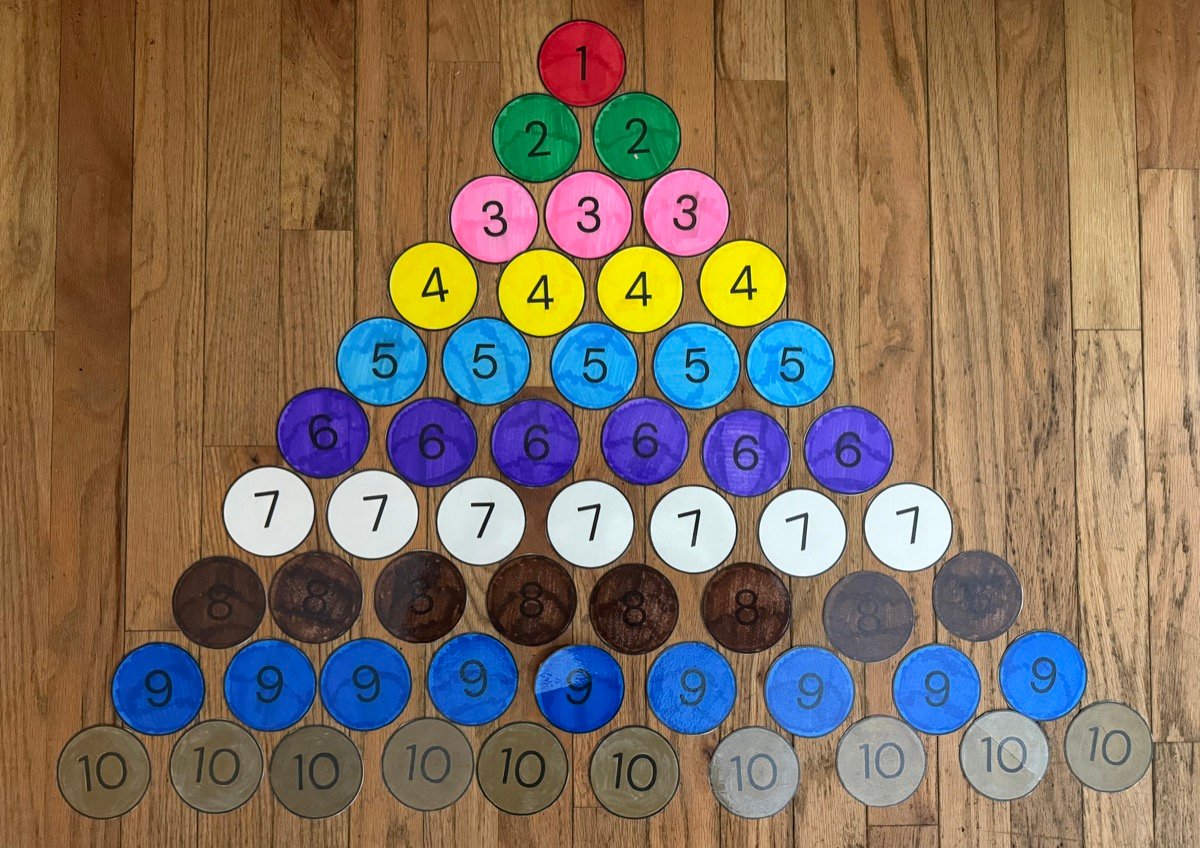
The bead stair is a color-coded set of bead bars: one red bead for 1, two green beads for 2, three pink beads for 3, and so on up to ten. Each number has its own color, so children start linking a color to an amount before they can read the numeral.
Lay the bars out in stair-step order and count the beads on each bar together. Ask questions like "Which bar has more?" or "What comes after the blue bar?" Over time, children learn the colors as a shortcut for amounts, which helps a lot with mental math later.
Our printed bead stair cards use the same color-coding in a flat format that's easy to store. They work well at home if you don't have the physical beads.
Ten Frames: Number Sense Past 10
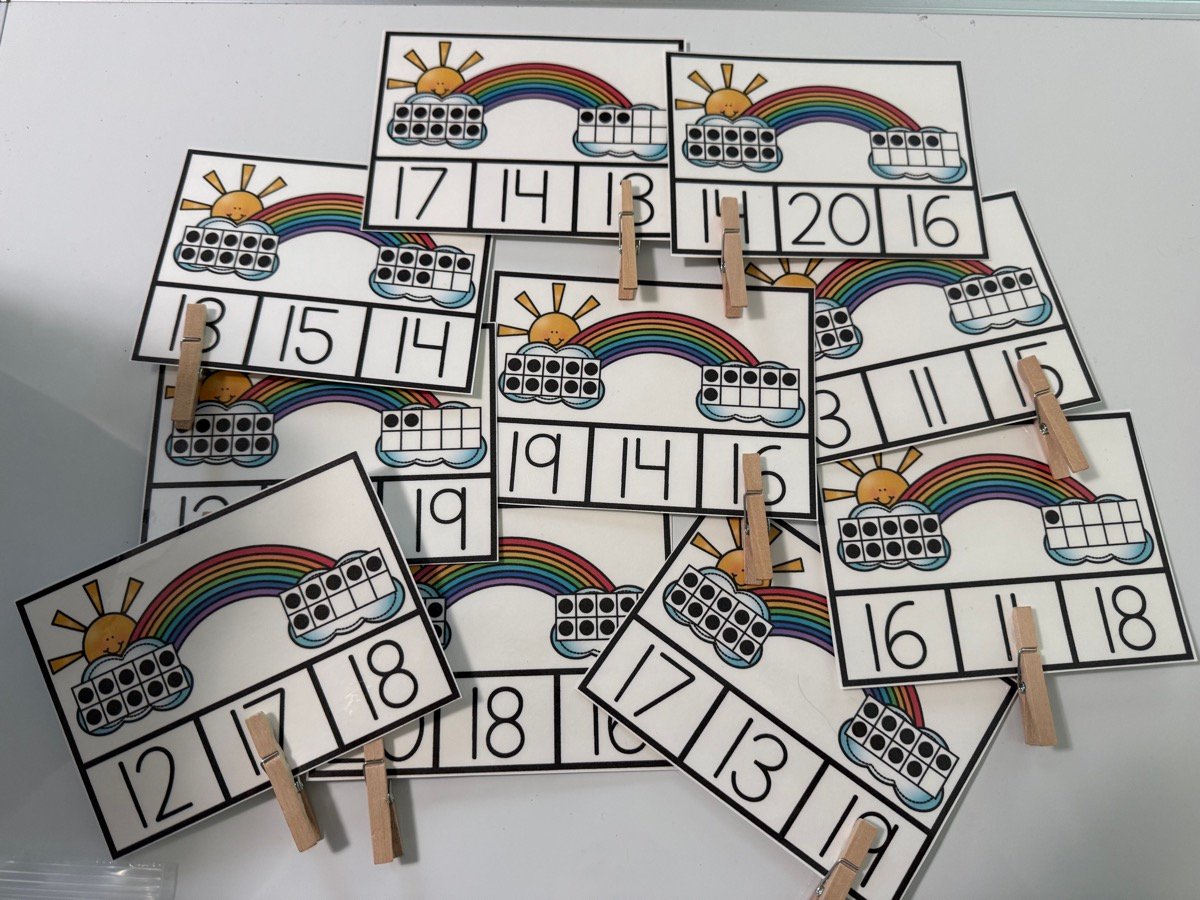
A ten frame is a simple 2×5 grid. Children fill it with counters and start to see how numbers relate to ten, the most important anchor number in our base-ten system.
With a ten frame, kids can see that 11 is one more than 10 and 18 is two less than 20. Numerals alone don't show that. Our Ten Frames Clip Cards cover 11–20 and are self-correcting: children count the dots, clip the right number, then flip the card to check.
Using Tally Marks and Clip Cards
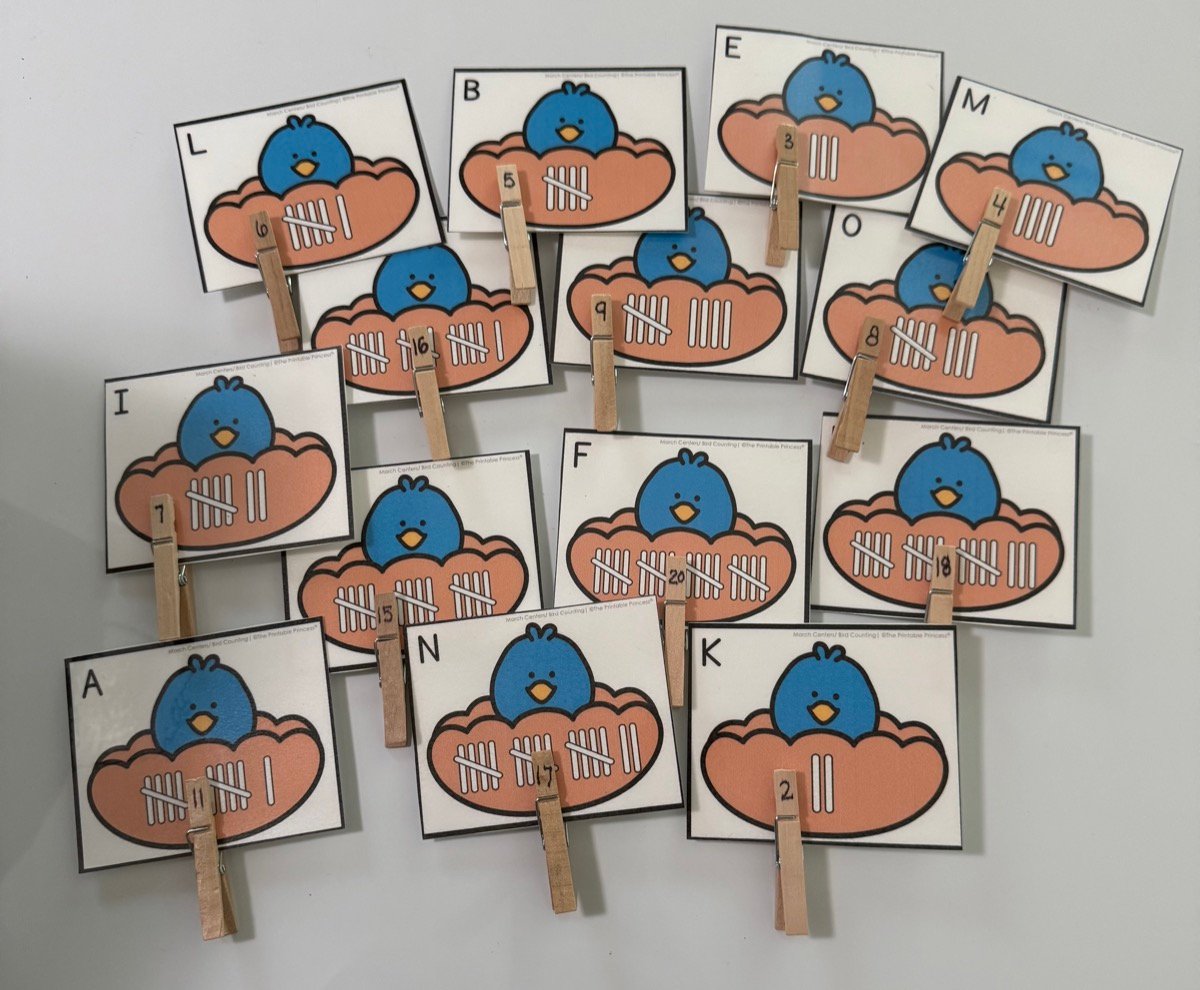
Tally marks connect counting to numerals. Kids see them in games, keeping score and classroom routines. Grouping by fives also gets them ready for skip counting and multiplication later.
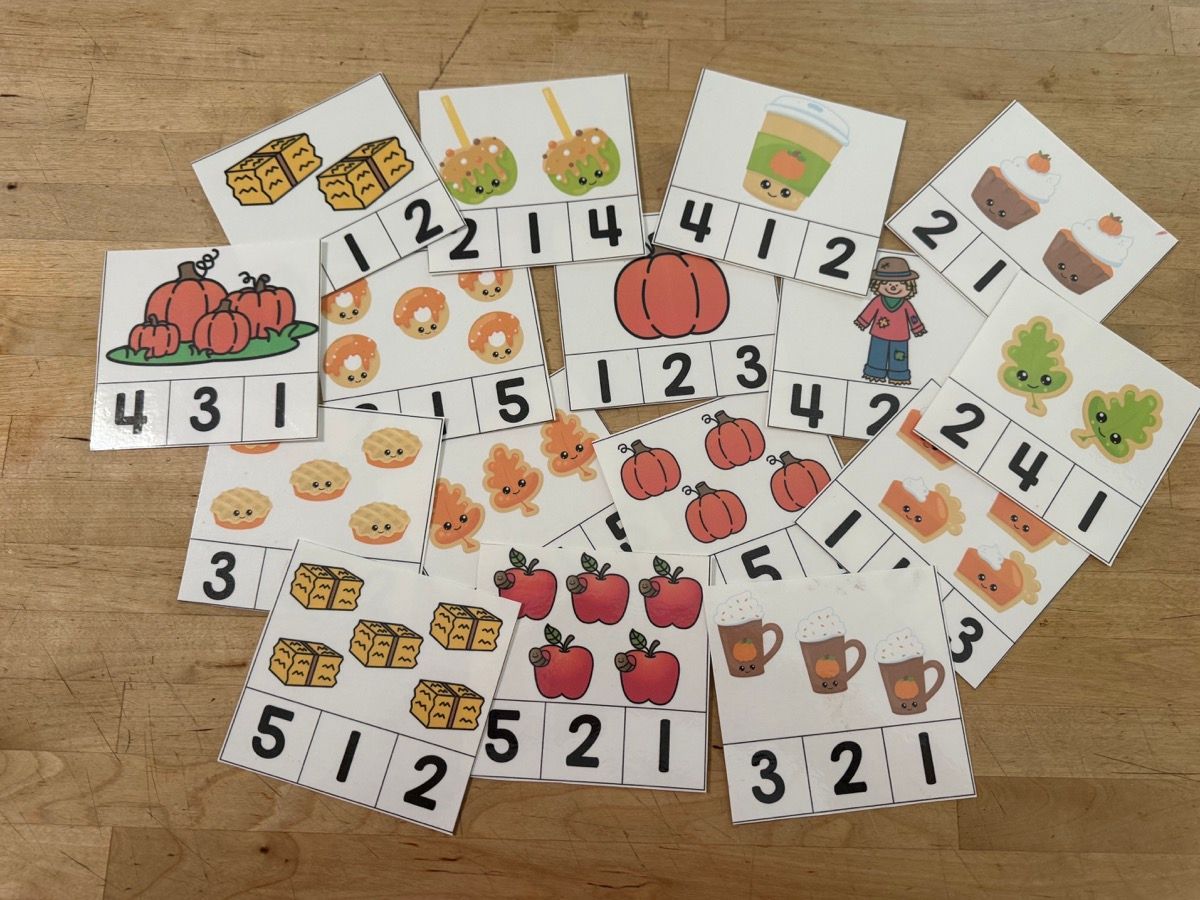
Clip cards are one of the most useful formats in early math. A child counts the objects (or tally marks), finds the right numeral and clips a clothespin on it. Clipping is good fine motor practice, and since the cards are self-correcting, kids can do them on their own.
Seasonal themes like fall leaves or Halloween pumpkins let you practice the same skill all year without it getting stale.
Frequently Asked Questions
What age should children start Montessori math?
Many children are interested in counting and amounts by 2.5–3. Simple work like placing objects on numbered cards or counting bead bars is fine at that age. Ten frames and tally marks usually come in around 4–5, when children are ready for quantities up to 20.
Do I need a full Montessori math set?
No. The golden bead material and long bead chains are nice, but you don't need them at home. What matters most is working with real quantities before written numerals. Printed bead stairs, ten frames and clip cards give you that same order for a lot less money.
How is Montessori math different from regular kindergarten math?
Mostly pacing and hands-on materials. Montessori math sticks with physical materials much longer than traditional programs, and children work on their own instead of the whole class learning the same thing at once. Kids also see very large numbers early (the thousand cube), which gives them a sense of scale that traditional programs often save for later.
My child can already count. Will these materials still help?
Counting and understanding quantity are different skills. A child who can count to 20 from memory may not have a real sense of how much "17" is. Ten frames and the bead stair build that understanding, and it's the base for adding, subtracting, multiplying and dividing.