Fall Patterning with Real Objects
Patterning is an early math skill that matters more than it looks. Kids who can read and continue ABAB and ABCABC patterns are already building the base for algebraic thinking later on. Fall is a good time to work on it because real seasonal objects make kids want to pick up the work.
What You'll Need
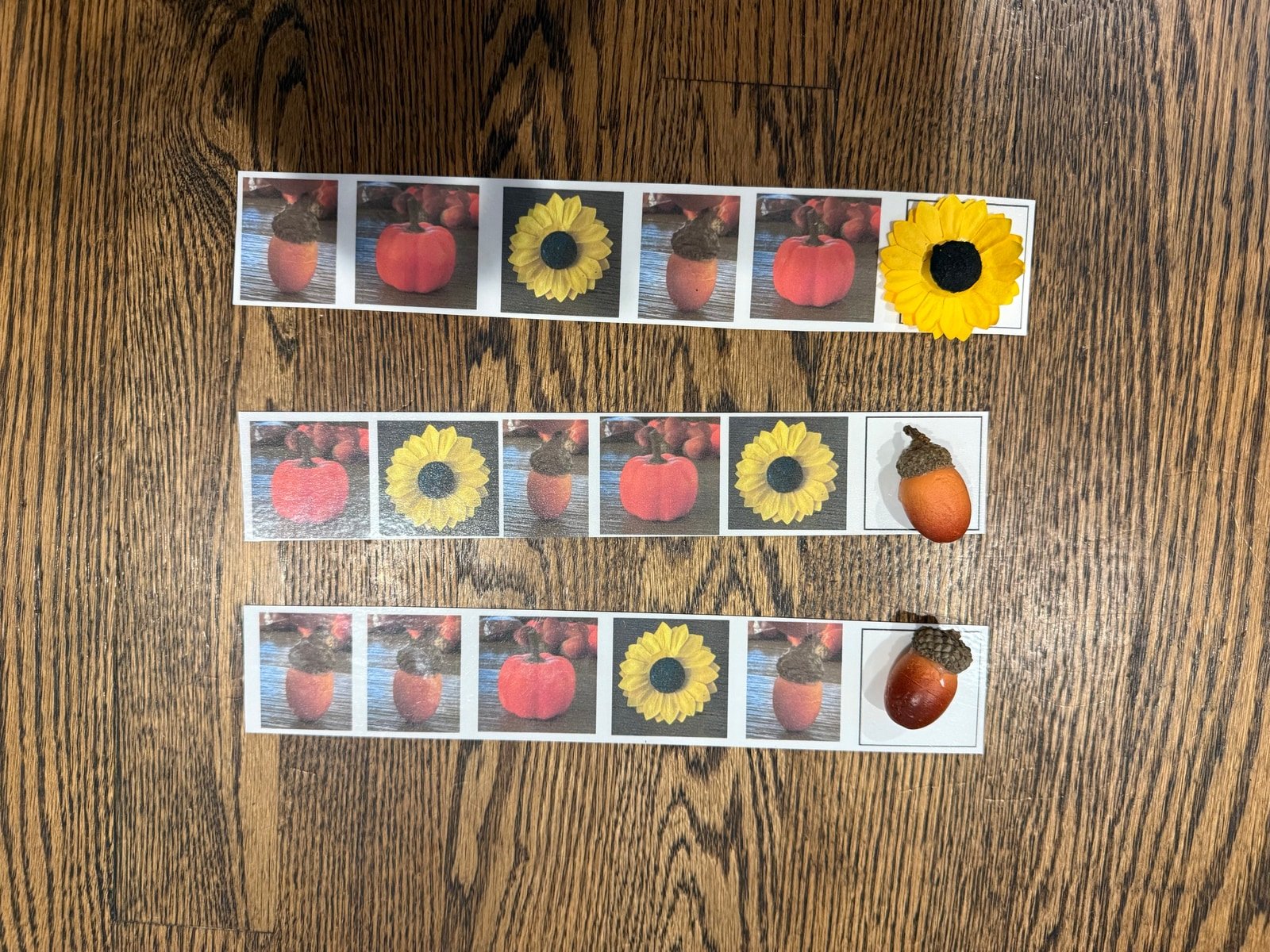
Printed pattern strips with fall pictures. Pumpkins, sunflowers and acorns go well together.
Real or realistic fall objects that match the pictures: small decorative acorns, a sunflower head, a mini pumpkin, or any fall nature items you can collect.
A work mat or tray to keep everything organized.
How to Do the Activity
Lay the pattern strips out on the mat. Each strip shows a repeating pattern that ends in a blank space. The child figures out what comes next and puts the matching real object in that space.
Start with simple ABAB patterns (pumpkin, sunflower, pumpkin, sunflower, blank) before moving on to ABCABC or AABB.
Once a child can extend the pattern, have them cover the strip and build the whole pattern from memory with just the real objects. Now they're making patterns, not only recognizing them.
Why Use Real Objects
Holding real objects (the weight of an acorn, the bumpy feel of a dried sunflower) gives kids something concrete to connect the idea of a pattern to.
Real objects also get kids to choose the work. A printed card next to a pile of real acorns pulls them over before they even think of it as math.
Nature items are free and change with the season, so you can swap them out to keep the same work interesting. Use pinecones in October and dried corn in November. The patterning skill stays the same.
Frequently Asked Questions
What if I can't get real objects?
Picture cards or small seasonal erasers work too. The important part is that the piece the child adds is something separate they can pick up and move, not just pointing at the strip.
How do I know when a child is ready for harder patterns?
When they can extend an ABAB pattern quickly and without hesitating, add a third item (ABCABC). When that's solid, try AABB or AABC. Follow the child. If they're frustrated, go back a step. If they're bored, move up.
Can a whole group do this?
Yes. Set out several strips at a table and let kids work side by side. Patterns are self-checking (it either continues correctly or it doesn't), so kids can work independently in a group.