Apple Life Cycle: A Fall Science Activity
The apple life cycle is a good fall science topic because kids already know how it ends: with an apple. Start with the apple, go back to the seed, then work forward through each stage. Putting stages in order like this is early science thinking, and it comes up again later in biology and environmental science.
What You'll Need
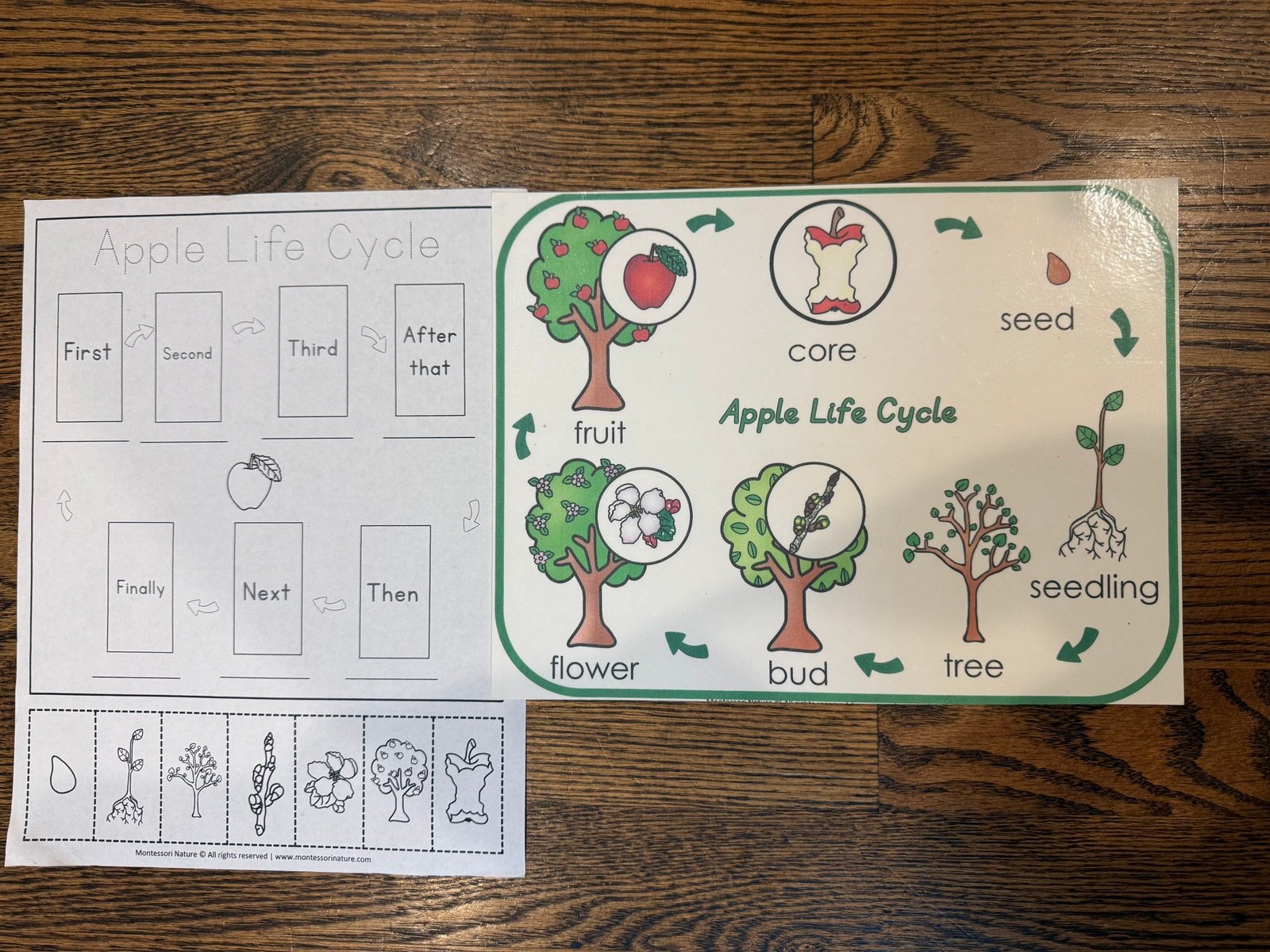
An apple life cycle diagram (seed, seedling, tree, bud, flower, fruit). Laminate it so you can use it again.
A sequencing worksheet where children cut out the life cycle stages and put them in order.
Optional: an accordion fold-out book template. Children color each stage and fold the pages into a small book to take home.
How to Do the Activity
Look at the diagram together and name each stage: seed, seedling, sapling, tree, flower, fruit. Ask if they've ever seen an apple tree, an apple blossom, or an apple seed.
Hand out the sequencing worksheet. Children cut apart the six stages and glue them in order, checking the diagram as they go.
For the accordion book, children color each stage, fold the pages back and forth, and staple apple-shaped covers on the front and back. When they open it up, the whole life cycle is laid out.
Connect It to a Real Apple
Cut an apple open at snack time and look at the seeds together. Ask what would happen if you planted one. The activity means more when it starts with something they can hold.
If you can visit an apple orchard, or even look at photos of apple trees in bloom, do it. The flower stage is usually the hardest one for kids to connect to the fruit, and seeing the blossoms helps.
Frequently Asked Questions
How many stages should I use with younger children?
Three stages (seed, tree, apple) is enough for children under 4. Use the six-stage version with children 4 and up who can handle a longer sequence.
Does this activity connect to early learning standards?
Yes. Life cycle sequencing is part of most early childhood science standards. It covers growth, change over time, and how plants and their seeds are connected.
Can I do this without a printed diagram?
Yes. Draw six circles in a ring, label each stage, and draw arrows between them. Children can sequence picture cards around the outside.